
The FIFA Futsal World Cup 2024 showcases a thrilling blend of rapid transitions and strategic possession, where game flow is constantly evolving. Momentum shifts can dramatically alter the course of a match, often triggered by critical plays that energise one team while impacting the other. Understanding these dynamics is essential for appreciating the intensity and excitement of futsal at this prestigious tournament.
What defines game flow in FIFA Futsal World Cup 2024 matches?
Game flow in FIFA Futsal World Cup 2024 matches is characterised by rapid transitions, strategic possession, and dynamic player interactions. The fast-paced nature of futsal requires teams to adapt quickly, influencing both offensive and defensive strategies throughout the match.
Key components of game flow in futsal
Several key components shape the game flow in futsal, including player movement, ball control, and tactical formations. The limited space on the court necessitates quick decision-making and precise execution from players.
- Player Movement: Constant movement creates opportunities and disrupts defensive setups.
- Ball Control: Effective dribbling and passing are essential for maintaining possession and creating scoring chances.
- Tactical Formations: Teams often employ flexible formations that can quickly shift between offensive and defensive roles.
Understanding these components allows teams to better anticipate the flow of the game and adjust their strategies accordingly.
Differences between futsal and traditional soccer game flow
The game flow in futsal differs significantly from traditional soccer due to the smaller playing area and fewer players. Futsal emphasises quick ball movement and rapid transitions, leading to a more frenetic pace.
- Space: Futsal courts are smaller, which leads to less time and space for players to operate.
- Player Count: With only five players per side, individual contributions are magnified, making every player crucial to the game flow.
- Game Duration: Futsal matches are played in shorter halves, intensifying the pace and urgency of play.
These differences require teams to adapt their strategies and gameplay to maintain control and capitalise on scoring opportunities.
Strategies for maintaining possession
Maintaining possession in futsal is vital for controlling the game flow and creating scoring chances. Teams often employ specific strategies to keep the ball away from opponents.
- Short Passing: Quick, short passes help to retain possession and create space.
- Movement Off the Ball: Players should constantly move to provide passing options and stretch the defence.
- Utilising the Walls: Players can use the walls to their advantage, allowing for creative passing angles and maintaining ball control.
Implementing these strategies can significantly enhance a team’s ability to dictate the pace of the game.
Transitioning between offense and defense
Effective transitions between offense and defence are crucial in futsal, as the fast pace often leads to quick changes in possession. Teams must be prepared to switch roles seamlessly to maintain control.
- Immediate Pressure: When possession is lost, players should apply immediate pressure to regain the ball.
- Defensive Shape: Quickly reorganising into a solid defensive shape can thwart counterattacks.
- Counterattacking: Conversely, when regaining possession, teams should look to exploit the opponent’s disorganisation with swift counterattacks.
Mastering these transitions can give teams a significant advantage in maintaining momentum and dictating game flow.
Impact of player positioning on game flow
Player positioning plays a pivotal role in influencing game flow in futsal. Strategic placement can enhance both offensive and defensive effectiveness.
- Spacing: Proper spacing allows for better passing lanes and reduces congestion, facilitating smoother ball movement.
- Defensive Positioning: Players should position themselves to cut off passing lanes and force opponents into less advantageous areas.
- Creating Overloads: Positioning players to create numerical advantages can lead to more effective attacks.
By understanding and optimising player positioning, teams can significantly impact the overall flow of the game and enhance their chances of success.

How do momentum shifts occur during matches?
Momentum shifts in futsal matches refer to sudden changes in the flow of the game, often influenced by key plays or events that can energise one team while demoralising the other. These shifts can be critical in determining the outcome of a match, as they often lead to changes in strategy and player performance.
Identifying key moments that shift momentum
Key moments that shift momentum typically include scoring events, critical saves, or significant fouls. These moments can change the emotional and psychological landscape of the game, impacting player confidence and team dynamics.
- Goals scored, especially in quick succession.
- Last-minute saves that prevent goals.
- Red cards or major fouls that alter team strategies.
- Successful timeouts leading to tactical adjustments.
Recognising these moments during a match can help teams capitalise on their advantages and regain control when necessary. Coaches and players must stay alert to these pivotal events to adjust their strategies accordingly.
Factors influencing momentum changes
Several factors can influence momentum changes during a futsal match. These include player performance, crowd support, and the tactical decisions made by coaches. Each factor can significantly affect how teams respond to challenges on the court.
- Individual player form and confidence levels.
- Fan engagement and support, which can uplift a team.
- Coaching strategies that adapt to the flow of the game.
- Physical and mental fatigue affecting player performance.
Understanding these factors allows teams to leverage their strengths and mitigate weaknesses, ultimately helping them maintain or regain momentum throughout the match.
Examples of momentum shifts from past tournaments
Historical examples of momentum shifts can provide valuable insights for teams. In the 2016 FIFA Futsal World Cup, a sudden goal by Portugal against Argentina turned the tide, leading to a series of aggressive plays that secured their victory.
Another notable instance occurred in the 2021 UEFA Futsal Championship, where a late equaliser by Spain shifted the momentum against Russia, resulting in Spain winning in extra time. Such examples highlight how quickly a match can change based on key moments.
Tactical adjustments that can alter game dynamics
Tactical adjustments are essential for managing momentum shifts during a match. Coaches may choose to alter formations or implement specific plays to counteract the opposing team’s strategies. For instance, switching to a more defensive formation can help a team protect a lead.
- Implementing a high press to regain possession quickly.
- Changing the goalkeeper for a more offensive player in critical moments.
- Utilising timeouts to regroup and strategise.
These adjustments can help teams regain control and influence the game’s direction, making it crucial for coaches to be adaptable and responsive to the unfolding dynamics.
Player performances that impact momentum
Individual player performances can significantly impact momentum shifts in futsal. A standout performance from a key player can energise the entire team and shift the game’s balance. For example, a player scoring multiple goals or making crucial assists can elevate team morale.
- Players who excel in high-pressure situations often lead momentum shifts.
- Defensive players making critical tackles can inspire confidence.
- Goalkeepers who make game-saving stops can change the course of a match.
Coaches should focus on developing players’ abilities to perform under pressure, as these moments can be decisive in maintaining or shifting momentum during critical phases of a match.

What are critical plays in FIFA Futsal World Cup 2024?
Critical plays in the FIFA Futsal World Cup 2024 are pivotal moments that significantly influence the outcome of matches. These plays can include key goals, defensive actions, or referee decisions that shift the momentum and alter the game’s trajectory.
Types of critical plays that influence match outcomes
Critical plays can be categorised into several types that impact match results. Understanding these types helps teams strategise effectively.
- Significant Goals: Goals scored during crucial moments that can change the morale of teams.
- Defensive Stops: Key interceptions or blocks that prevent the opposing team from scoring.
- Counterattacks: Rapid transitions from defence to offence that catch opponents off guard.
- Set Pieces: Goals or opportunities generated from free kicks or corner kicks.
- Time Management: Effective use of the game clock to maintain or regain control.
Analysis of significant goals and their contexts
Significant goals often occur during critical phases of the match, such as the last few minutes or after a major foul. These goals can shift momentum, energising the scoring team while demoralising the opponent.
For example, a last-minute goal can lead to a dramatic change in strategy, forcing the trailing team to take risks that may leave them vulnerable to counterattacks. In the FIFA Futsal World Cup 2024, teams must be prepared for such scenarios, as they can define the outcome of knockout matches.
Additionally, the context surrounding a goal, such as the player’s form or the match’s stakes, can amplify its significance. A goal scored by a star player in a decisive match can have a lasting psychological impact on both teams.
Defensive maneuvers that can change the game
Defensive maneuvers are crucial in maintaining a team’s lead or preventing a comeback. Effective defending can thwart the opponent’s scoring opportunities and build confidence within the team.
Key defensive strategies include tight marking, effective communication among players, and anticipating the opponent’s moves. For instance, a well-timed tackle or interception can not only stop a goal-scoring chance but also create a counterattack opportunity.
In the FIFA Futsal World Cup 2024, teams that excel in defensive tactics often find themselves in advantageous positions, as they can control the pace of the game and frustrate their opponents.
Role of referee decisions in critical moments
Referee decisions can greatly influence the flow and outcome of a match. Key calls, such as penalties or red cards, can shift momentum and alter team strategies.
For instance, a penalty awarded in the dying minutes of a match can lead to a dramatic equaliser or game-winner, while a red card can force a team to play defensively, often leading to a loss of control. In the FIFA Futsal World Cup 2024, teams must adapt quickly to these decisions to mitigate their impact.
Moreover, the consistency and accuracy of refereeing can affect players’ morale and performance. Teams that remain composed and focused despite controversial calls often have a competitive edge.
Statistical data supporting critical play analysis
Statistical analysis of critical plays provides valuable insights into their impact on match outcomes. Data can reveal trends and patterns that teams can leverage for strategic planning.
| Type of Play | Impact on Outcomes | Frequency in Matches |
|---|---|---|
| Significant Goals | High | Occurs in approximately 30-40% of matches |
| Defensive Stops | Moderate | Seen in 20-30% of matches |
| Counterattacks | High | Utilised in around 25-35% of matches |
| Set Pieces | Moderate | Account for about 15-25% of goals |
By analysing these statistics, teams can identify which critical plays are most effective and adjust their strategies accordingly to maximise their chances of success in the tournament.
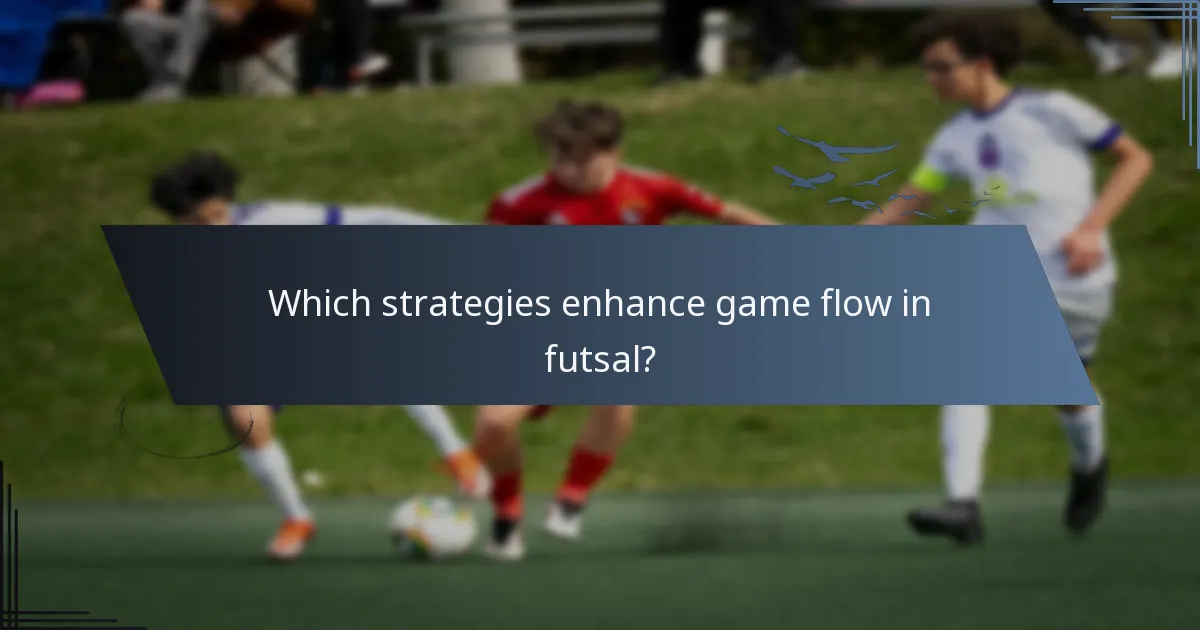
Which strategies enhance game flow in futsal?
Strategies that enhance game flow in futsal focus on quick transitions, effective player positioning, and maintaining width in play. These elements allow teams to exploit spaces and create scoring opportunities while minimising defensive vulnerabilities.
Effective formations for optimising game flow
Choosing the right formation is crucial for optimising game flow in futsal. Common formations include 2-2, 3-1, and 1-3, each offering different advantages in terms of spacing and player roles. For instance, a 2-2 formation provides a balanced approach, allowing for both defensive solidity and offensive support.
Player positioning within these formations significantly impacts the ability to transition quickly between defence and attack. Players must be aware of their roles and maintain proper spacing to facilitate quick passes and movement. This positioning allows teams to stretch the play and create opportunities on the flanks.
Utilising width in play is essential for breaking down opposing defences. By spreading the players across the court, teams can create mismatches and open up passing lanes. Effective communication among players is vital to ensure that everyone understands their positioning and can react swiftly to changes in the game.
- 2-2 Formation: Offers balance between attack and defence.
- 3-1 Formation: Emphasises offensive pressure with one player focusing on defence.
- 1-3 Formation: Prioritises a strong attacking presence while maintaining defensive cover.
Pressing and counter-pressing are also key strategies that enhance game flow. Teams that press effectively can regain possession quickly, while counter-pressing allows them to capitalise on opponents’ mistakes. This dynamic play style keeps the game fast-paced and engaging, making it essential for teams to practise these strategies consistently.
Leave a Reply